What We Had to Unlearn About Dentistry
With Dr. Griffin Cole
The first job that changed his career. The beliefs he had to reconsider. And why good dentistry starts with getting to know the person in the chair.
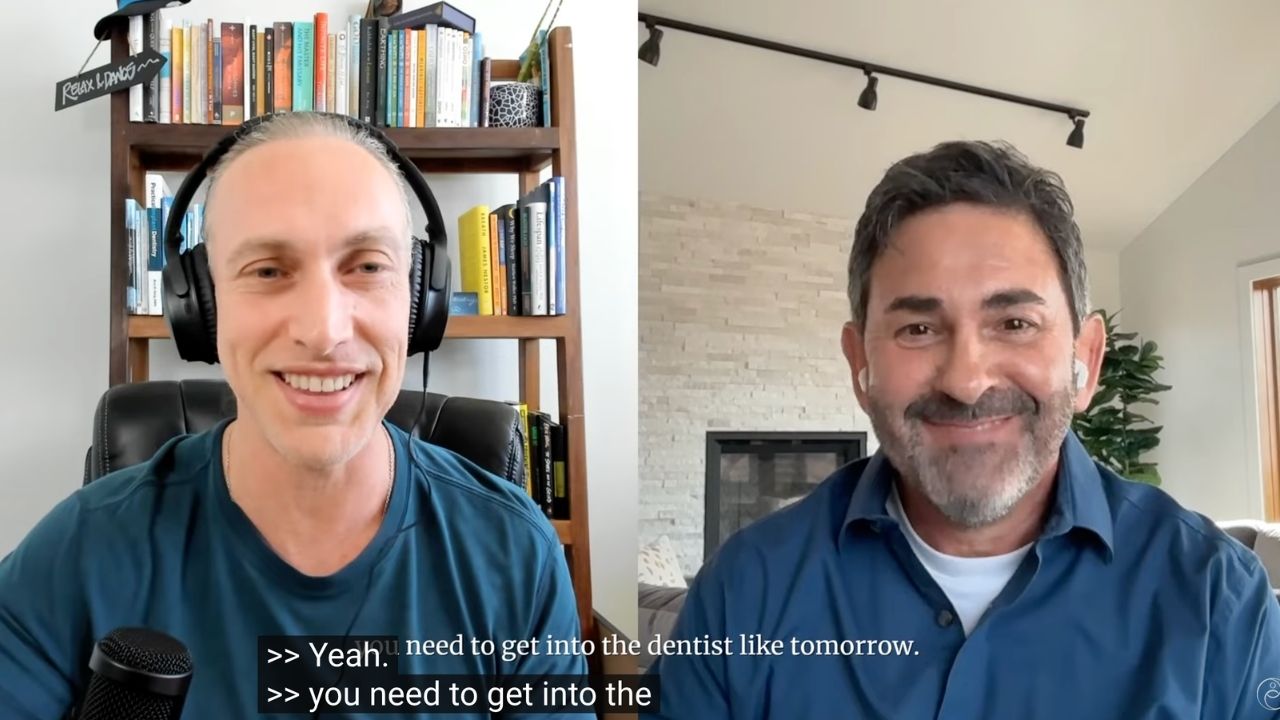
Watch the conversation
Pull up a chair.
Prefer to listen?
Take the conversation with you.
Listen to the full episode with Dr. Griffin Cole on Spotify.
Embedded players are provided by YouTube and Spotify and are subject to those platforms’ privacy practices. Direct links are available above.
Episode notes · By Dr. Seth Gilson
A personal place to begin
When I first heard about biological dentistry in 2017, I started asking other dentists about it. The people I asked had not heard of it either. I remember wondering what I had stumbled into.
Griffin Cole was one of the first faces I came across as I started learning. To open Season 2, I wanted to hear his story. Not just what he does differently, but how he got there, what challenged him, and what he is still figuring out.
We talk about teeth, of course. But we keep coming back to people: the patients who teach us, the colleagues who challenge us, and the people at home who remind us there is a life outside the practice.
The first job that changed everything
After sending hundreds of letters to dentists in different cities, Griffin received an invitation to meet Dr. Dan Rosen in Austin. It was 1992, and the practice had one requirement for its new associate: no amalgam fillings.
Griffin remembers thinking that was strange. His wife saw it differently. He liked the dentist, liked the office, and they liked Austin. Why not take the opportunity?
That decision introduced him to a different way of practicing. It also brought uncertainty. He describes finding his own patients, giving talks to small groups, and returning to his dental school to discover that colleagues were making fun of an advertisement for his mercury-free practice.
He was excited about what he was learning. He was also nervous about whether he could make it work. Both were true.
“Once I took that leap, there was no going back.”
A conversation, not just a medical history form
One of the things Griffin returns to is time. Time to ask questions. Time to understand someone’s daily habits. Time to be quiet long enough to hear what they are actually saying.
He describes an intake that goes beyond reviewing a form. What matters to this person? What have they noticed? What are they worried about? Sometimes, he explains, the first step was coordinating with another healthcare professional before beginning dental treatment.
For me, that is an important part of mindful care: not arriving at an answer before we have understood the person asking for help.
Looking beyond the tooth in front of us
Our conversation moves into nutrition, the oral microbiome, and how we think about the relationship between oral health and the rest of the body.
Griffin shares a pattern he noticed in practice: someone would rate their overall health highly, then give their oral health a much lower score. Asking both questions opened a conversation about why they saw the two so differently.
We also discuss his perspective on fluoride and his interest in alternatives such as hydroxyapatite. These are the speakers’ perspectives within a broader conversation, not a systematic review of the evidence or a personalized treatment recommendation.
Taking care of others does not mean we have it all figured out
When I ask Griffin which personal health practices he protects, he does not give a polished answer. He tells me he has been traveling almost every weekend and is not always following his own advice.
He talks openly about hurting his neck while practicing dentistry, wanting more time at home, and looking back on commitments he might have handled differently. He is proud of his work. He also wishes he had taken better care of himself along the way.
That part stayed with me. Knowing the value of rest does not mean we always make room for it.
Find a dentist you can actually talk to
Near the end, I ask Griffin for one piece of advice for patients. His answer is to do your own research and find a dentist with whom you can build a trusting relationship.
What I appreciate is that he does not make it about a label. He says that dentist could be a mainstream dentist. The willingness to listen, the quality of the work, and mutual respect matter.
That leads us into biomimetic dentistry and three priorities I describe in the episode: maintaining tooth vitality, preserving critical tooth structure, and restoring a tooth to function more like a natural tooth. For me, this is where biological and biomimetic thinking come together in daily practice.
Explore my approach to holistic, biological, and biomimetic dentistry
A thought to take with you
Start with curiosity.
My invitation at the end of this episode is not to change everything overnight. It is to become a little more curious about your own body. Ask another question. Notice what you have been overlooking. Make room for a conversation.
Sometimes the next step is not doing more. It is listening more carefully.
Find your place
Inside the episode
Choose a chapter to open that moment on YouTube.
- 00:00 Welcome to Season 2
- 01:20 The first job that changed everything
- 02:56 What Griffin had to unlearn
- 04:33 Being questioned by colleagues
- 13:19 A real conversation, not just a form
- 15:42 The oral microbiome
- 20:31 Caring for yourself while caring for others
- 30:29 Questions worth asking your dentist
- 34:50 What mindful medicine means
- 36:13 Griffin’s perspective on fluoride
- 42:14 Finding a dentist you trust
- 43:35 Biomimetic dentistry and preserving teeth
Chapter times follow the interview transcript and may differ slightly from the final video edit.
Meet our guest
Dr. Griffin Cole
Griffin’s career in biological dentistry began in Austin in the early 1990s. In this episode, he looks back on the experiences that shaped his approach to patients and the lessons he continues to share through teaching.
A past president of the International Academy of Oral Medicine and Toxicology, he also reflects on the importance of helping other dentists learn, ask questions, and find their footing.
Before you go
A few good questions
Is this episode for patients or dentists?
Both. Griffin shares his experience of changing how he practiced. Our discussion about communication, trust, and choosing a dentist is intended to be useful to people receiving care, too.
What does “unlearning” mean here?
It is Griffin’s description of reconsidering beliefs and routines he carried from dental school into practice. We explore how further learning, his first job, and patient relationships changed his thinking.
Is this page a complete transcript?
No. These are edited episode notes. Watch or listen to the complete conversation using the players above, or use the chapter links to explore a specific topic.
The Mindful Doctor
Where Dentistry Meets Whole-Body Healing.
More conversations about oral health, whole-body wellness, and the people behind the work.