
Clear Aligner Orthodontics in Aventura, South Florida
Clear Aligner Orthodontics
Straight teeth are part of the goal. A healthier, more functional bite is the bigger conversation.
I use clear aligners to move teeth thoughtfully, improve alignment and address selected bite problems while keeping oral hygiene practical and considering the patient’s long-term function.
My approach goes beyond making the front teeth look straight. I also consider arch form, how the teeth come together, jaw function, TMJ symptoms, airway-related findings and what will help the result remain stable.
My Orthodontic Philosophy
I do not move teeth just to make them look straighter.
Orthodontics changes the relationship between teeth, bone, periodontal tissues and the bite.
That means clear aligner treatment should begin with a diagnosis, not an online simulation.
Before moving teeth, I want to understand the existing bite, periodontal health, restorations, tooth position, available space, jaw relationships and the patient’s goals.
The digital plan is a tool. It does not replace clinical judgment, monitoring or the biological response of an actual patient.
More Than Straight Teeth
Six things I think about when planning clear aligner treatment.
Alignment
Crowding, rotations and spacing influence both appearance and how easily teeth can be maintained.
The Bite
The way upper and lower teeth meet affects function, wear, restorative planning and long-term stability.
Arch Form
Dental arch width, tooth position and available space are evaluated before deciding how teeth should move.
TMJ + Muscles
Existing jaw pain, clenching, muscle tension and bite instability deserve attention before and during treatment.
Airway Context
Breathing patterns, mouth breathing, sleep symptoms and oral anatomy can provide important context when planning orthodontic care.
Stability
The goal is not simply to reach the last aligner. Retention and long-term function need to be considered from the beginning.
Bite + Function
A beautiful smile should still function well.
Teeth do not exist as isolated cosmetic objects.
They contact opposing teeth, absorb forces, guide the jaw, support speech and participate in chewing every day.
Clear aligner treatment can be used to improve selected bite relationships as well as tooth alignment, but what can be predictably achieved depends on the individual case.
Airway-Aware Orthodontics
I consider airway. I do not pretend aligners diagnose or cure sleep apnea.
This distinction matters.
Orthodontic planning changes tooth position and sometimes arch form. Because oral anatomy, nasal breathing, tongue posture and sleep symptoms can intersect, I believe they deserve attention during the evaluation.
But clear aligners are not a substitute for a sleep study or medical diagnosis of obstructive sleep apnea.
What Clear Aligners Can Address
A versatile tool, but not the right tool for every orthodontic problem.
Suitability depends on the severity and biology of the individual case.
How Clear Aligner Treatment Works
Plan digitally. Monitor clinically.
Removable Is an Advantage and a Responsibility
Clear aligners only work when they are worn.
Removability makes aligners convenient, but it also makes treatment highly dependent on patient consistency.
Aligners are typically worn most of the day according to the treatment prescription and removed for eating, drinking certain beverages and oral hygiene.
If aligners are not worn as directed, teeth may not track with the digital plan and treatment can take longer or require additional refinement.
Evidence-Informed Orthodontics
Digital precision does not mean biological perfection.
Clear aligners are capable tools, but planned tooth movement and achieved tooth movement are not always identical.
That is why clinical monitoring, refinements and case selection still matter.
Systematic reviews support clear aligner therapy for selected tooth movements and bite corrections, while predictability varies by the movement being attempted.
Recent comparative evidence suggests that rotation, torque and certain vertical movements can be less predictable, reinforcing the need for monitoring and refinement.
A 2025 systematic review found clear aligners can effectively correct selected mild-to-moderate dentoalveolar deep bites, although treatment accuracy can fall short of the planned correction.
Clear aligners are removable, which can simplify brushing and flossing compared with fixed appliances, but oral-health outcomes still depend heavily on patient behavior.
Orthodontic research evolves. Treatment effectiveness depends on diagnosis, biomechanics, tooth movement, patient cooperation and clinician oversight.
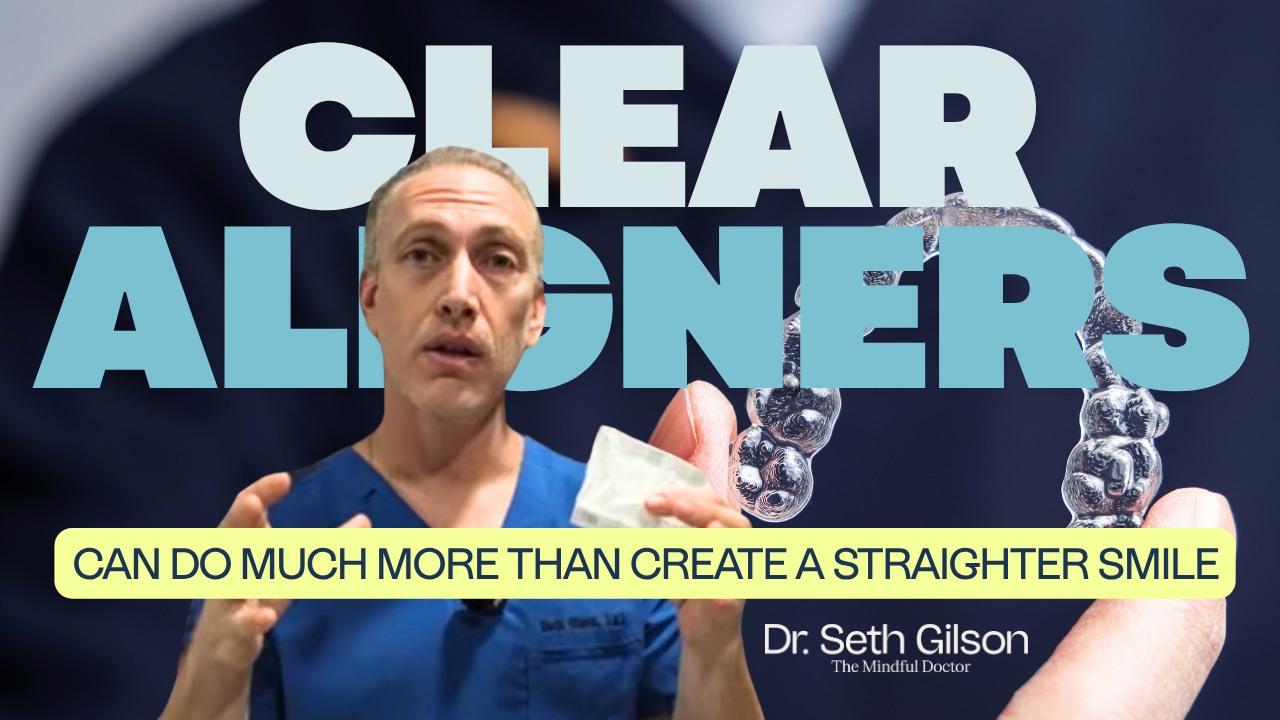
Clear Aligners Through a Mindful Lens
Orthodontics is about where the teeth end up and how they work when they get there.
Clear aligners can be discreet and convenient, but those are not the reasons I care most about them.
What interests me is the ability to plan controlled tooth movement, improve selected bite relationships, make hygiene more manageable during treatment, and coordinate orthodontics with restorative, TMJ and whole-person dental goals.
The technology is useful. The diagnosis and treatment philosophy still come first.
From @mindful.doctor
See how I talk about clear aligner treatment with patients.
Orthodontics should be understandable.
I want patients to understand what we are trying to change, why we are changing it and what role the aligners actually play.
This reel gives you a shorter look at the way I approach clear aligner therapy.
Retention + Longevity
The last aligner is not the end of orthodontic treatment.
Teeth have a lifelong tendency to move.
Retention is therefore part of the treatment plan, not an optional afterthought.
Long-term stability also depends on the bite, periodontal health, clenching, growth and aging, oral habits and whether retainers are worn as prescribed.
Clear Aligners in South Florida
Adult clear aligner orthodontics in Aventura.
I provide clear aligner treatment at Our Holistic Dentistry in Aventura, Florida.
Patients visit from Aventura, Miami, Hollywood, Fort Lauderdale and throughout South Florida looking for an orthodontic approach that considers more than cosmetic alignment.
If you are comparing clear aligner providers, ask more than: “How quickly can you straighten my teeth?”
Ask how the bite is being diagnosed, how movements will be monitored, how TMJ symptoms and periodontal health are considered, what happens if teeth do not track as planned, and how the result will be retained.
Questions
Clear Aligner Orthodontics FAQs
What are clear aligners?
Clear aligners are removable orthodontic appliances created as a sequence of custom trays. Each stage is designed to apply controlled forces that gradually move teeth toward planned positions.
Are clear aligners only cosmetic?
No. Clear aligners can be used to improve tooth alignment and selected bite relationships. My treatment planning considers function, occlusion, periodontal health, TMJ, arch form and long-term stability in addition to appearance.
Can clear aligners fix my bite?
Clear aligners can address selected deep bites, open bites, crossbites, overjet and other dental bite problems. Predictability depends on the specific movement, severity and underlying jaw relationship. Some problems require other orthodontic techniques or specialist collaboration.
Can clear aligners improve airway or sleep apnea?
Clear aligners are not a stand-alone treatment for obstructive sleep apnea. I consider airway, breathing, arch form and sleep-related symptoms when they are relevant to orthodontic planning. Suspected sleep apnea requires appropriate medical or sleep evaluation.
Are clear aligners easier to keep clean than braces?
Their removability can make normal brushing and flossing easier than cleaning around fixed brackets and wires. However, oral hygiene still requires consistency, and teeth should be cleaned before aligners are replaced whenever practical.
How often do I need to wear clear aligners?
Aligners generally need to be worn for most of the day according to the prescribed plan. Specific wear instructions vary by patient and stage of treatment. Consistent wear is one of the major factors affecting whether treatment tracks as planned.
Will I need attachments?
Possibly. Small tooth-colored attachments can give aligners additional control for certain movements. Whether attachments or other auxiliaries are needed depends on the treatment plan.
What are refinement aligners?
Teeth do not always move exactly as predicted digitally. Refinement aligners are additional stages created when the clinical result needs further adjustment before treatment is considered complete.
Will I need a retainer after treatment?
Yes, retention is generally necessary after orthodontic treatment because teeth can shift throughout life. Your specific retention plan depends on the case and final result.
Is everyone a candidate for clear aligners?
No. Certain complex tooth movements, significant skeletal discrepancies, severe periodontal concerns or other orthodontic problems may be better treated with a different approach or with an orthodontic specialist.
How do I schedule a clear aligner evaluation in South Florida?
Request an appointment through Mindful Doctor. We begin by evaluating your teeth, bite, periodontal health, TMJ, existing dentistry and treatment goals before deciding whether clear aligners are appropriate.
Request an appointment →Start With the Bite
Straighten the teeth with the whole system in mind.
We can evaluate your alignment, bite, periodontal health, TMJ, arch form, airway-related findings and long-term goals to determine whether clear aligner treatment makes sense for you.
This page is educational and does not establish a dentist-patient relationship or replace individualized orthodontic examination, diagnosis, imaging or treatment planning.