
Mercury Amalgam Filling Removal in Aventura, South Florida
SMART Mercury Amalgam Removal
If an amalgam filling needs to come out, how it is removed matters.
Dental amalgam contains mercury. Removing an amalgam restoration with a dental drill can temporarily increase exposure to mercury vapor and mercury-containing particulate.
That is why I do not approach amalgam removal as an ordinary filling replacement. I use the International Academy of Oral Medicine and Toxicology’s Safe Mercury Amalgam Removal Technique, or SMART, an exposure-reduction protocol designed specifically for this procedure.
Start With the Material
“Silver filling” does not describe what is actually in it.
Dental amalgam is approximately half elemental mercury by weight, combined with metals such as silver, tin and copper.
Amalgam has been used in dentistry for more than a century because it is durable and relatively forgiving to place.
The material is sometimes called a “silver filling,” but that name can obscure one of its major ingredients: elemental mercury.
Both the FDA and the IAOMT recognize that amalgam restorations release mercury vapor. Release can change with chewing, grinding, placement and especially removal.
The debate is not whether mercury is physically present. The debate centers on how much exposure matters, to whom, and what should be done about an existing restoration.
Read the FDA dental amalgam information →Why Consider Removing an Amalgam?
The decision should have a reason, not fear behind it.
I practice mercury-free dentistry, but I do not believe responsible care starts by telling every patient that every existing filling must immediately come out.
The restoration is failing
Fracture, marginal breakdown, recurrent decay or structural failure can create a clear dental reason to replace an amalgam.
The tooth is compromised
Large restorations, cracks or weakened cusps may require a new restorative plan designed around preserving the remaining tooth.
Material sensitivity
Some patients have known hypersensitivity or allergy to mercury or another component of dental amalgam.
Informed material preference
Some patients decide they no longer want mercury-containing restorative material in their mouths after reviewing the available information.
Restorative redesign
An existing amalgam may need replacement as part of a larger biomimetic, restorative or treatment-planning decision.
Personal risk considerations
Medical history, pregnancy, kidney function, neurological conditions or other individual circumstances can make a thoughtful conversation about dental materials especially important.
An Important Distinction
Whether to remove and how to remove are two different questions.
Once removal is planned, the temporary increase in mercury exposure during drilling becomes directly relevant.
The FDA does not recommend routine removal of an intact, clinically sound amalgam solely for the purpose of preventing a disease. One reason is that removal itself can temporarily increase mercury vapor exposure and requires removal of some tooth structure.
The IAOMT takes a more precautionary position regarding dental mercury and developed SMART to reduce exposure when amalgams are removed.
My approach: I do not place amalgam. If replacement is indicated or you make an informed decision to replace an existing amalgam, I believe the removal process deserves a dedicated mercury-exposure protocol.
The SMART Technique
SMART is designed around one objective: reduce exposure during removal.
SMART stands for Safe Mercury Amalgam Removal Technique.
The International Academy of Oral Medicine and Toxicology developed the protocol from research concerning mercury vapor, particulate exposure and environmental contamination during amalgam removal.
IAOMT describes SMART as a set of recommendations. The protocol adds layers of patient, clinician, operatory and environmental protection beyond simply drilling out an old filling.
Explore the official IAOMT SMART protocol →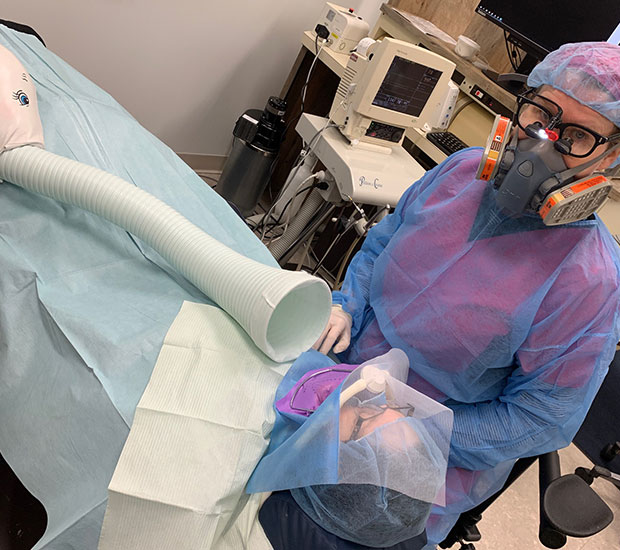
Layers of Protection
What makes SMART different from ordinary amalgam removal?
No single device is the SMART protocol. The strength of the system is the combination of multiple exposure-reduction measures.
Separate air or oxygen source
A nasal mask provides a separate source of air or oxygen so the patient is not relying on room air immediately around the operative site.
Non-latex dental dam
A dental dam isolates the tooth being treated and helps limit contact with amalgam debris inside the mouth.
High-volume evacuation
High-volume suction is positioned close to the treatment site to capture vapor, aerosols and particulate as they are generated.
At-source air filtration
IAOMT calls for high-volume air filtration capable of capturing mercury vapor and amalgam particles generated during removal.
Copious water irrigation
Continuous water helps reduce heat while the restoration is being sectioned and removed.
Sectioning instead of pulverizing
Whenever possible, the filling is cut into larger pieces so less material must be ground away with the dental bur.
Patient protection
Protective drapes, facial coverings and other barriers help limit contact with particles created during the procedure.
Team protection
The dentist and clinical team use protective equipment intended for the exposure risks associated with amalgam removal.
Amalgam waste management
An amalgam separator collects mercury-containing waste so it is not simply discharged into dental-office wastewater.
IAOMT SMART Certified
Certification matters because the protocol is specific.
SMART is not simply using extra suction or putting a rubber dam around a tooth. It is a coordinated system of exposure-reduction measures.
Training + Clinical Implementation
I chose to become certified because amalgam removal deserves more than improvisation.
I am a SMART-certified IAOMT dentist and use the protocol when mercury amalgam restorations are removed in my practice.
IAOMT describes SMART certification as specialized education in mercury science, safe amalgam removal, protocol equipment and practical implementation.
For me, certification is not a badge to decorate a website. It represents a decision to follow a defined framework when performing a procedure where exposure can be reduced through preparation and technique.
Learn about IAOMT SMART certification →After the Amalgam Is Gone
Removal is only half of the restorative decision.
What remains of the tooth matters just as much as what came out.
Once the amalgam is removed, I evaluate the actual condition of the remaining enamel, dentin, cracks, decay and cusps.
The replacement should be based on what that tooth needs, not simply on matching the shape of the old filling.
Watch
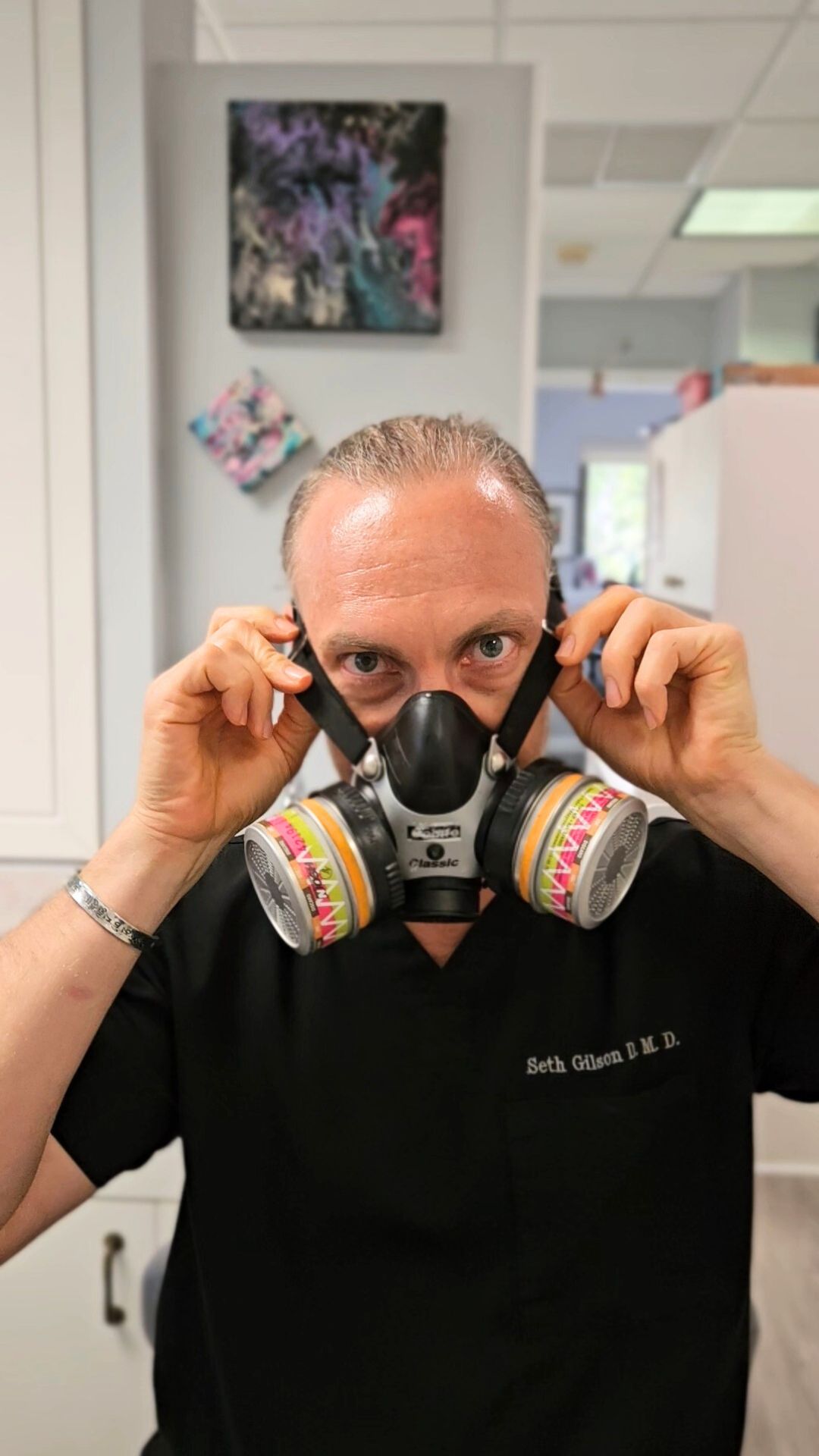
Why mercury amalgam removal deserves a dedicated protocol.
The removal appointment can temporarily generate more mercury vapor and particulate than simply leaving the restoration untouched.
That fact is central to the SMART philosophy. If the material is going to be removed, the procedure should be designed around reducing exposure to the patient, dental team and treatment environment.
Research + Guidance
What do major organizations actually say?
Trust means separating what is established from what remains debated.
The FDA identifies elemental mercury as roughly half of dental amalgam by weight.
FDA dental amalgam information →Both FDA information and IAOMT guidance acknowledge increased mercury release during amalgam removal.
IAOMT safe amalgam removal information →IAOMT officially renamed its amalgam-removal recommendations the Safe Mercury Amalgam Removal Technique in 2016 and developed a SMART certification program.
Read more from IAOMT →FDA guidance identifies certain populations who may be more susceptible to potential adverse effects from mercury exposure and recommends avoiding new amalgam when possible and appropriate.
Read the FDA patient guidance →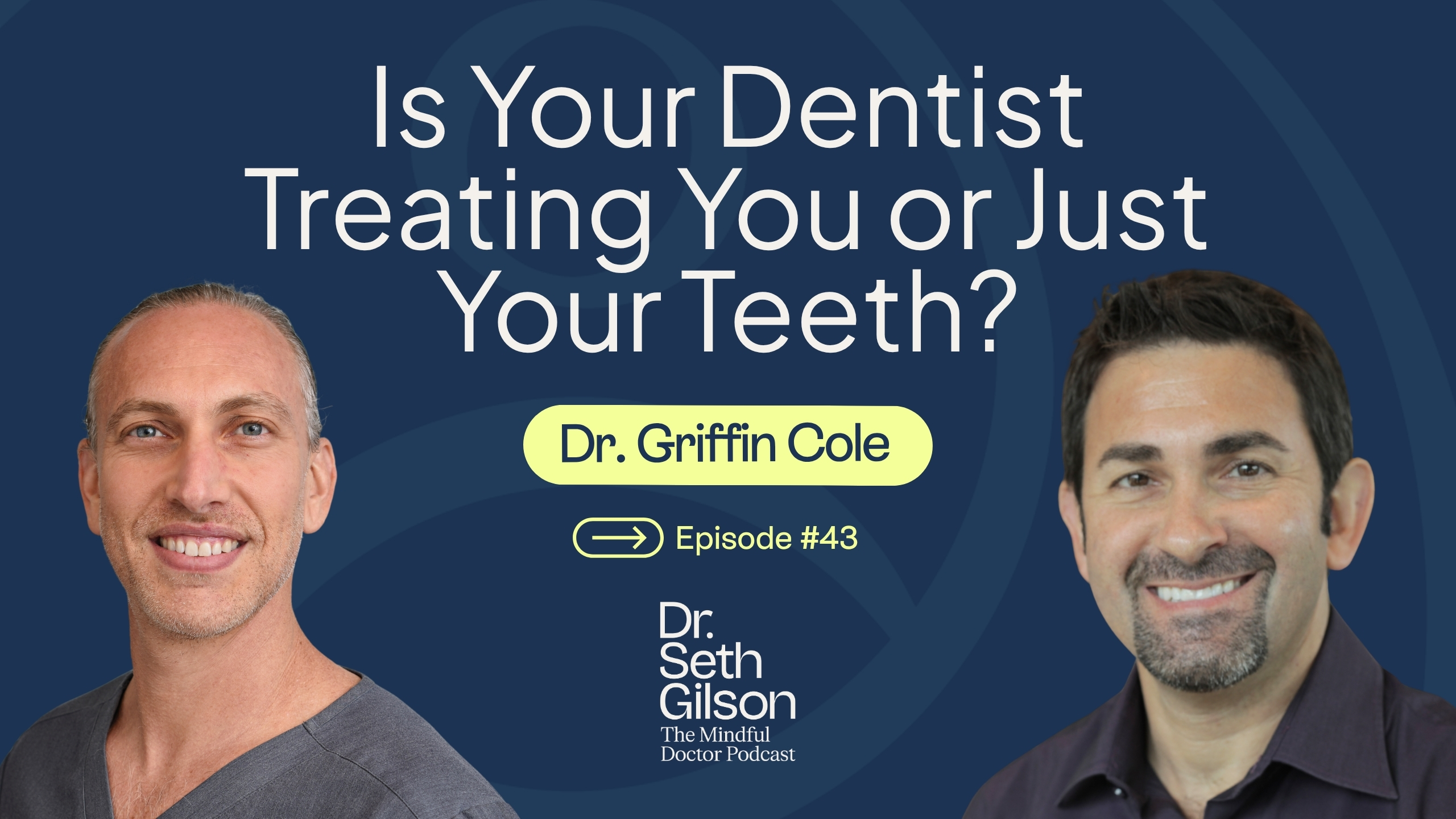
The Mindful Doctor Podcast
A conversation with former IAOMT president Dr. Griffin Cole.
Griffin Cole’s career in biological dentistry began in a mercury-free practice in Austin in the early 1990s.
In our conversation, we discuss the experiences that changed the way he practiced, his path into biological dentistry, the mouth-body relationship, patient trust, fluoride and preserving natural teeth.
Griffin is a past president of the International Academy of Oral Medicine and Toxicology and has remained involved in the organization’s education and leadership.
What to Expect
Evaluate first. Remove only after we understand the tooth.
SMART Certified Dentist in South Florida
Mercury amalgam removal in Aventura with IAOMT SMART certification.
I provide SMART mercury amalgam removal at Our Holistic Dentistry in Aventura, Florida.
Patients visit from Aventura, Miami, Hollywood, Fort Lauderdale and throughout South Florida specifically looking for a dentist trained in safe mercury amalgam removal.
If you are comparing dentists, ask a very specific question: “Are you SMART certified, or do you simply remove amalgam fillings?”
Those are not necessarily the same thing.
Questions
SMART Mercury Amalgam Removal FAQs
What does SMART stand for?
SMART stands for Safe Mercury Amalgam Removal Technique. It is a set of recommendations developed by the International Academy of Oral Medicine and Toxicology to reduce exposure to mercury vapor and mercury-containing particulate during amalgam removal.
Are amalgam fillings really 50% mercury?
Approximately half of dental amalgam by weight is elemental mercury. The remainder consists primarily of metals such as silver, tin and copper.
Do amalgam fillings release mercury vapor?
Yes. FDA information states that amalgam fillings release low levels of mercury vapor. Mercury release can also increase during placement and removal.
Should every amalgam filling be removed?
I do not believe every intact amalgam automatically requires immediate removal. The condition of the tooth, restoration, decay, cracks, health history, patient preferences and risks of replacement should be considered. The FDA does not recommend removing an intact amalgam solely to prevent a disease. If removal is planned, I use SMART to reduce exposure during the procedure.
Why is special protection needed during removal?
Drilling an amalgam restoration can generate mercury vapor, fine particulate and larger debris. SMART combines isolation, separate patient air, high-volume evacuation, at-source air filtration, water irrigation, protective barriers and other measures intended to reduce exposure.
What is SMART certification?
IAOMT SMART certification is specialized education focused on mercury and safe dental amalgam removal. IAOMT’s program includes scientific education, testing, protocol training, protective equipment and implementation of SMART safety measures. Dr. Seth Gilson is SMART certified through the IAOMT.
What replaces the amalgam filling?
The replacement depends on the amount and quality of remaining tooth structure. Options can include bonded composite or ceramic restorations. The objective is not merely to replace a dark filling with a white one. The tooth should be evaluated and restored according to its structural needs.
Is mercury detoxification part of SMART?
SMART is primarily an amalgam-removal exposure-reduction protocol. It should not be confused with diagnosing mercury toxicity or prescribing systemic detoxification. Questions about an individual’s medical mercury exposure or systemic treatment should be addressed with an appropriately qualified healthcare professional.
How do I schedule SMART amalgam removal in South Florida?
Start with an appointment at Mindful Doctor and Our Holistic Dentistry in Aventura. We first evaluate the existing restorations and surrounding teeth before planning removal.
Request an appointment →Start With an Evaluation
If you are considering removing mercury amalgam fillings, understand both the tooth and the removal protocol first.
We can evaluate your existing restorations, discuss why you are considering replacement, review restorative options, and determine whether SMART removal is appropriate for your situation.
This page is educational and does not establish a dentist-patient relationship or replace individualized dental or medical evaluation.