The Mindful Doctor Podcast · Episode 44
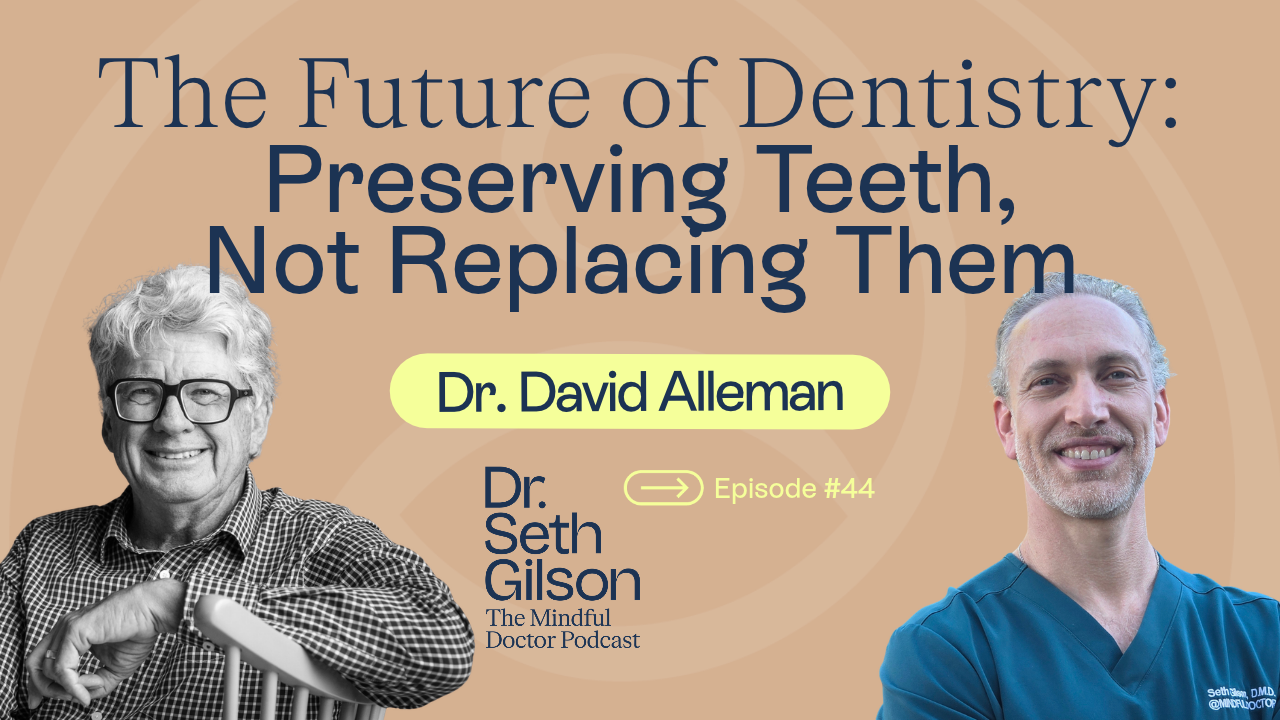
The future of dentistry: preserving teeth, not replacing them.
A conversation with Dr. David Alleman
What happens when a clinician questions the accepted way of doing things and dedicates his life’s work to finding a better approach?
An exploration of biomimetic restorative dentistry, dental longevity, scientific curiosity, and the courage to challenge convention.
Hosted by Dr. Seth Gilson, DMD
Watch the full conversation
Transforming dentistry.
The innovative approach of biomimetic restorative dentistry.
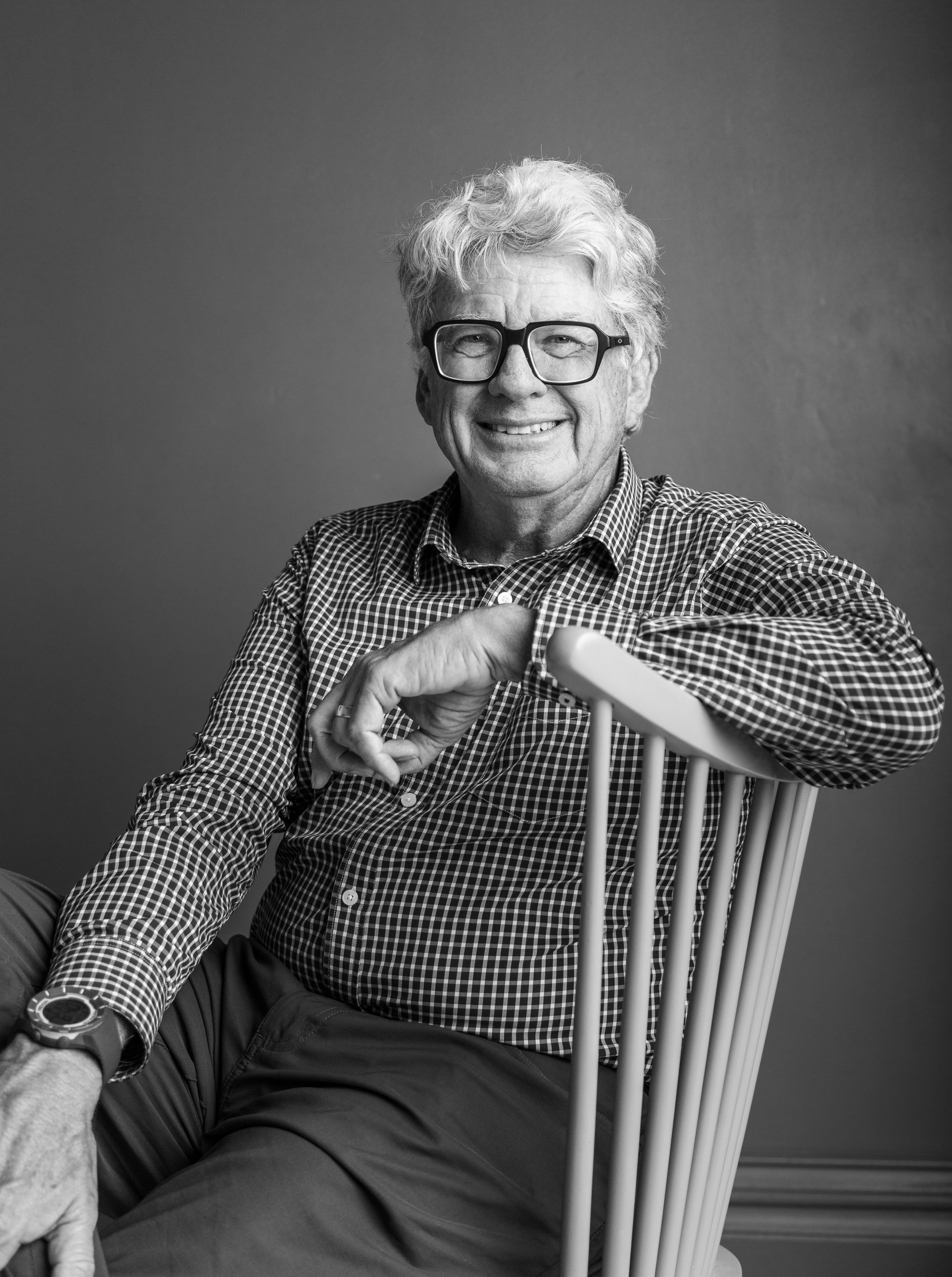
Meet my guest
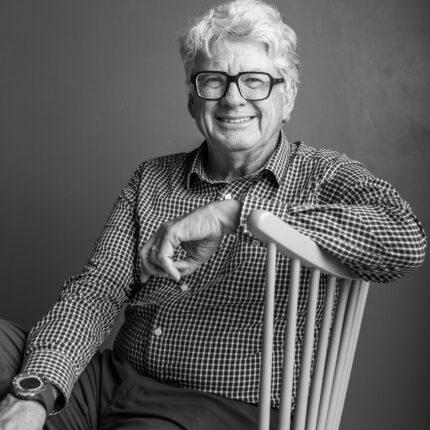
Dr. David Alleman.
Pioneer in biomimetic restorative dentistry.
Dr. David Alleman is the founder and lead instructor at the Alleman Center of Biomimetic Dentistry and the creator of its Six Lessons Approach.
After 17 years of practicing traditional dentistry, he became increasingly frustrated with the unpredictability of restorative outcomes. Sensitivity, recurrent decay, fractures, and the loss of teeth led him to question the techniques he had been taught.
His search for answers brought together decades of scientific research in adhesion, tooth biomechanics, and restorative dentistry, helping shape an approach centered around conserving natural tooth structure.
I know David not only as an innovator, but also as a teacher and mentor. His work has had a profound influence on the way I approach restorative dentistry today.
Beyond the dental chair
He quit dentistry. Then helped change it.
Innovation rarely begins with certainty. It begins with discomfort, curiosity, and the courage to question convention.
During our conversation, David shares how his frustration with traditional restorative outcomes led him to temporarily leave dentistry and reconsider what it meant to truly restore a tooth.
Rather than accepting sensitivity, repeated treatment, and progressive loss of tooth structure as inevitable, he began looking more closely at the science behind these problems.
What emerged was a different way of thinking about dentistry. One that prioritizes understanding the biology and biomechanics of a natural tooth before deciding how to restore it.
But this conversation is about more than dental techniques. It is about learning from failure, remaining curious, and recognizing when familiar ways of doing things deserve to be questioned.
“Biomimetic dentistry really is just dentistry that’s finally respecting nature.”
Dr. Seth Gilson · Episode 44
Understanding biomimetic dentistry
What are we trying to preserve?
The word biomimetic means to mimic nature. In restorative dentistry, this means understanding how a natural tooth functions and using that knowledge to guide its restoration.
Preserve vitality.
Maintain the living pulp of the tooth whenever reasonably possible. Preventing unnecessary root canal treatment begins with accurate diagnosis, thoughtful prevention, and conservative restorative care.
Preserve structure.
Conserve healthy, functional tooth structure. The goal is to remove what is necessary while respecting the natural architecture and biomechanics of the tooth.
Restore like nature.
Use appropriate adhesive techniques and restorative materials to reproduce, as closely as possible, the mechanical and functional characteristics of a natural tooth.
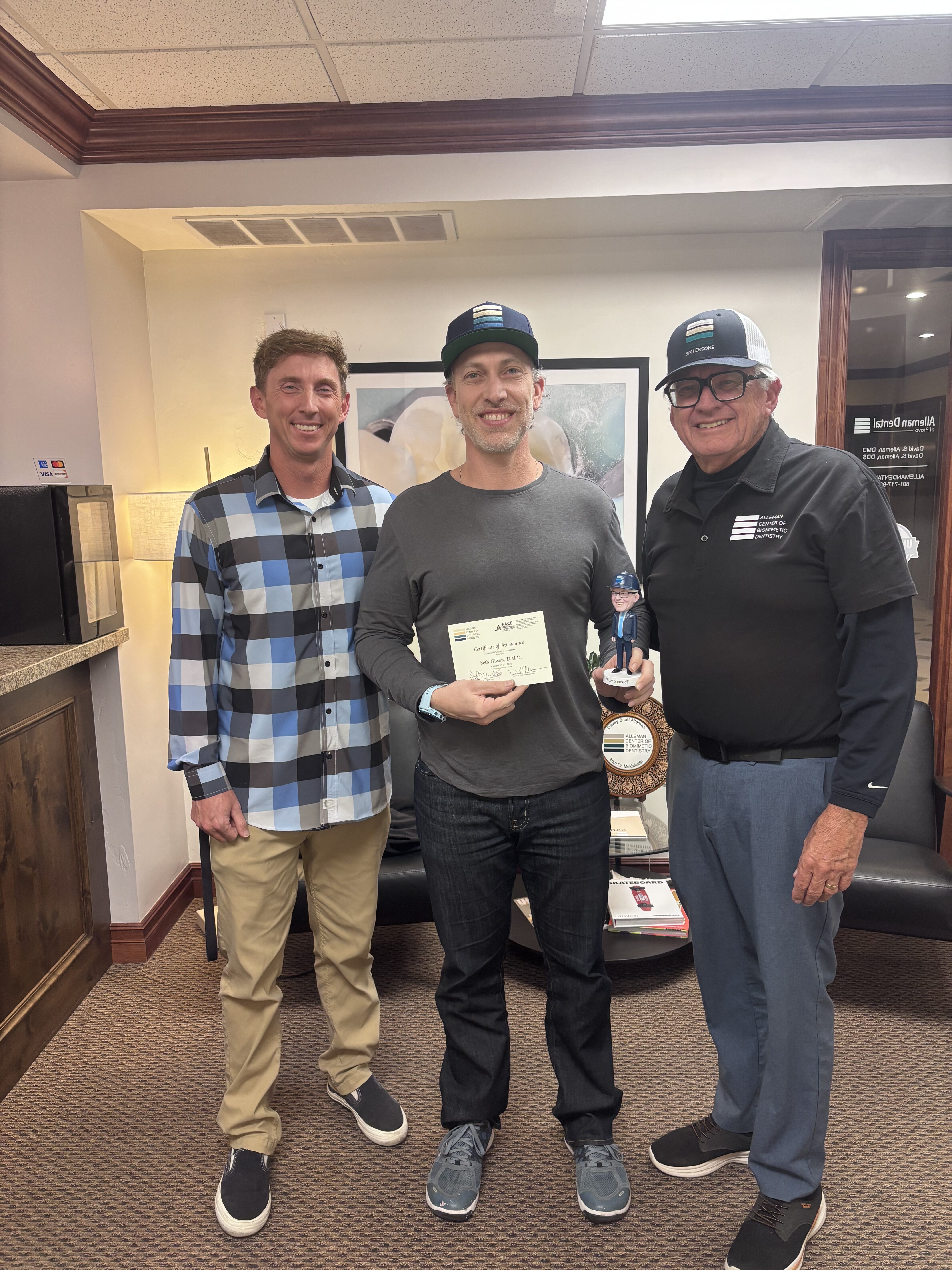
A personal connection
From student to practitioner.
My journey into biomimetic dentistry has changed the way I think about restoring teeth.
Through my training with Dr. David Alleman and Dr. Davey Alleman, I have developed a deeper appreciation for the science behind adhesive dentistry and the importance of understanding why we do what we do.
For me, it was never enough to simply follow a technique. I wanted to understand the research, the biology, and the reasoning behind each clinical decision.
This philosophy is now an essential part of my practice. It aligns naturally with my holistic and biological approach to dentistry and my commitment to dental longevity.
Having the opportunity to share this conversation with one of my mentors makes this episode particularly meaningful to me.
Dr. Seth Gilson, DMD
Inside Episode 44
A conversation worth exploring.
Whether you are a patient curious about your treatment options or a dental professional interested in restorative science, this episode offers a different perspective on the future of dentistry.
- Why Dr. Alleman temporarily walked away from dentistry.
- The relationship between restorative dentistry and tooth sensitivity.
- The cycle of increasingly invasive dental treatments.
- The importance of preserving natural tooth structure and pulp vitality.
- The origins of biomimetic restorative dentistry.
- The Six Lessons Approach and the science behind it.
- Why restorative techniques matter alongside material selection.
- The difference between the initial price and long-term value of dental treatment.
- Prevention, proactive care, and dental longevity.
- How curiosity, failure, and lifelong learning drive innovation.
Patient education
Questions worth asking.
Understanding your options is an important part of making informed decisions about your oral health.
What is biomimetic restorative dentistry?
Biomimetic restorative dentistry is an approach that aims to conserve healthy tooth structure, maintain vitality when possible, and restore teeth in a way that mimics their natural function. It incorporates principles of adhesive dentistry, biomechanics, and restorative science.
Can biomimetic dentistry help me avoid a crown?
In selected cases, adhesive partial-coverage restorations may provide an alternative to full-coverage crowns. The appropriate treatment depends on the amount and location of damage, the remaining tooth structure, and the clinical condition of the tooth.
Can biomimetic dentistry prevent root canals?
Preserving pulp vitality is an important goal of conservative restorative dentistry. Appropriate diagnosis, prevention, and restorative techniques may help reduce the need for endodontic treatment in selected cases.
However, not every tooth can remain vital. When the pulp is irreversibly damaged or infected, other treatments may be necessary.
Is sensitivity after a filling normal?
Sensitivity after restorative treatment can have several causes. Its presence alone does not establish whether a restoration has failed.
Persistent, worsening, or significant sensitivity should be evaluated by your dentist to determine the underlying cause.
What materials are used in biomimetic dentistry?
Adhesive composites and ceramics are commonly used, depending on the clinical situation. However, biomimetic dentistry is not defined by a particular material or brand.
Diagnosis, isolation, bonding, restoration design, and the remaining tooth structure are all important considerations.
What should I ask my dentist before restorative treatment?
Ask about the diagnosis, how much natural tooth structure can reasonably be preserved, and whether there are appropriate alternatives.
Discuss the benefits, limitations, expected maintenance, costs, and possible consequences of delaying treatment. Your treatment should reflect your individual clinical needs and informed preferences.
For the curious
Keep learning.
Curiosity is where progress begins. Explore these resources to better understand the principles and research discussed in this episode.
- Dr. David Alleman: Official Biography Alleman Center of Biomimetic Dentistry.
- What is Biomimetic Restorative Dentistry? An introduction to the philosophy and clinical priorities of biomimetic dentistry.
- Partial caries removal in deep caries lesions: a five-year multicenter randomized controlled trial. Maltz and colleagues, 2018. Clinical research on conservative caries management and pulp vitality.
- Immediate dentin sealing improves bond strength of indirect restorations. Magne and colleagues, 2005. Laboratory research on adhesive restorative techniques.
- Immediate or delayed dentin sealing: a three-year randomized clinical trial. Van den Breemer and colleagues, 2019. Clinical evaluation of partial ceramic restorations.
Laboratory findings and individual clinical experiences should not be interpreted as guarantees of treatment success or longevity.
Continue the conversation
Connect with Dr. Alleman.
Explore his educational work, research, and contributions to biomimetic restorative dentistry.
A mindful perspective
Healing isn’t about doing more. It’s about seeing more clearly.
One thing that stays with me after this conversation is the reminder that progress, whether in dentistry, medicine, or life, begins with curiosity.
My invitation to you is not necessarily to become an expert in dentistry, but to notice where in your own life you may have accepted something simply because it is familiar.
Ask questions. Seek understanding. Make informed decisions. And remember that preserving what is healthy is just as important as treating what is not.
Thank you for being part of The Mindful Doctor Podcast.
Dr. Seth Gilson, DMD
The Mindful Doctor
Dental longevity begins with a different way of thinking.
My approach brings together holistic, biological, and biomimetic dentistry with a focus on prevention, education, and the preservation of your natural teeth.