The Future of Dentistry: Preserving Teeth, Not Replacing Them
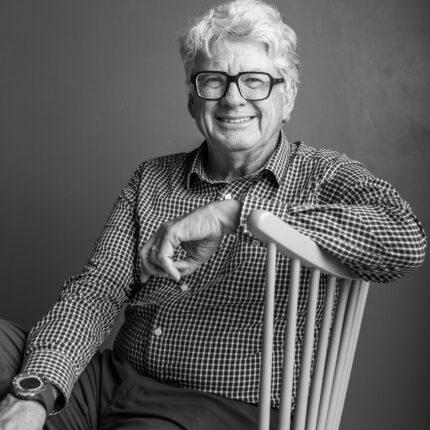
With Dr. David Alleman
The frustration that led him to quit dentistry. The science that brought him back. And a life’s work dedicated to finding a better way to preserve our natural teeth.
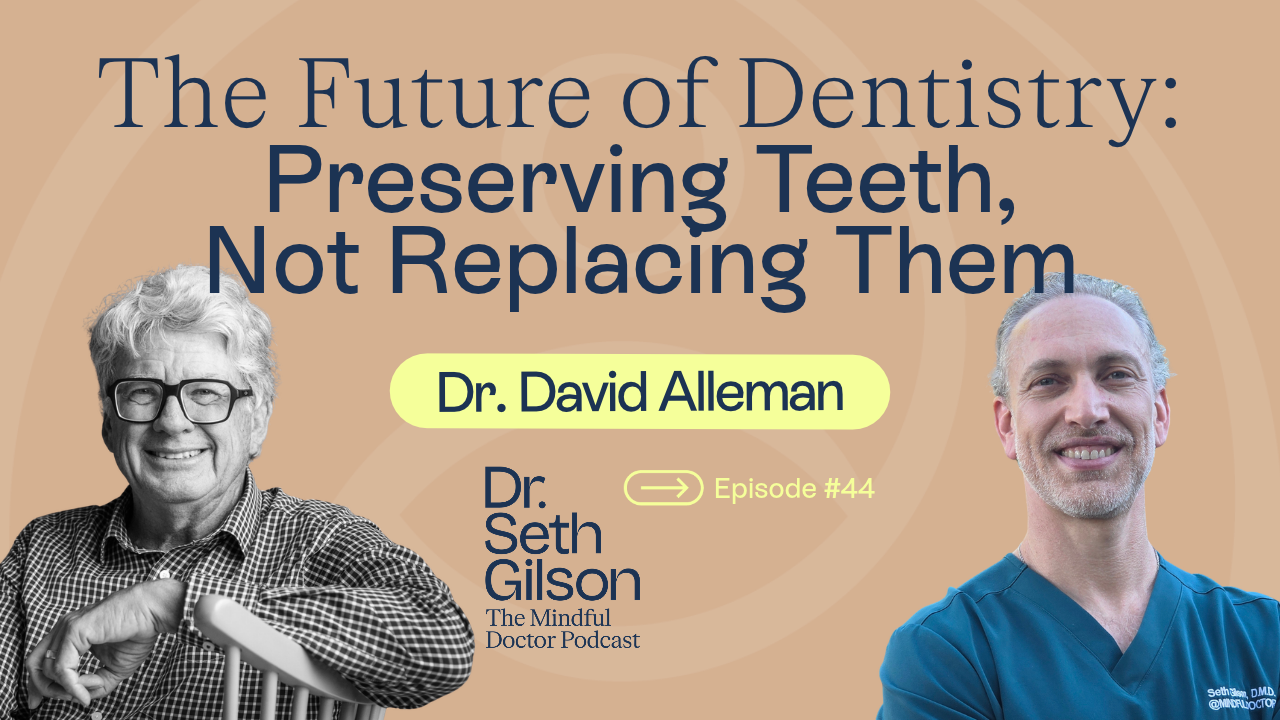
Watch the conversation
Pull up a chair.
Prefer to listen?
Take the conversation with you.
Listen to or watch the full episode with Dr. David Alleman on Spotify.
Embedded players are provided by YouTube and Spotify and are subject to those platforms’ privacy practices. Direct links are available above.
Episode notes · By Dr. Seth Gilson
A personal place to begin
There are conversations that are particularly meaningful to me, and this is one of them. Dr. David Alleman is not only someone whose work I admire. He is one of my teachers and mentors.
I first learned about his work through my colleague, Dr. Mark Limosani. What followed was a deeper exploration of adhesive dentistry, tooth biomechanics, and the science behind preserving natural teeth.
His approach to biomimetic restorative dentistry has fundamentally influenced the way I practice and how I think about dental longevity.
But for this conversation, I wanted to go beyond the clinical techniques. I wanted to understand the person behind the innovation, the experiences that shaped his thinking, and what it took to challenge convention.
The courage to begin again
After 17 years of practicing traditional dentistry, David became increasingly frustrated with the unpredictability of restorative outcomes.
He describes patients who had become lifelong friends, only to see some of their teeth develop complications years after treatment. He had followed the techniques he had been taught, yet the outcomes were not always what he had hoped for.
Rather than accepting those experiences as inevitable, he began questioning the way he had been practicing. Eventually, he temporarily walked away from dentistry altogether.
“The thing that drove me to innovate was I was so frustrated with traditional dental outcomes that I actually quit dentistry.”
Finding a better way
His introduction to adhesive dentistry gave him a reason to return. What followed was years of studying the scientific literature, connecting research from different disciplines, and developing a more systematic approach to restoring teeth.
One of the things I find particularly meaningful about his story is that innovation was not simply the result of wanting to create something new. It came from wanting to solve problems he had experienced with his own patients.
What is tooth sensitivity telling us?
When I ask David what frustrated him most about traditional restorative dentistry, his answer is immediate: sensitivity.
We explore the relationship between the living tissues inside a tooth, the movement of fluid within dentin, cracks, and the interface between a restoration and the remaining tooth structure.
It is one of the more technical parts of our conversation, but the central idea is important for patients: understanding why a tooth is sensitive matters before deciding what to do about it.
Persistent or worsening sensitivity deserves an appropriate evaluation. Different causes require different approaches, and symptoms alone do not establish a diagnosis.
Dentistry that respects nature
Biomimetic means to mimic nature. In dentistry, that involves understanding how a natural tooth is structured, how it functions, and how its different tissues behave under everyday forces.
David explains how scientific research from different disciplines informed the development of his Six Lessons Approach to biomimetic restorative dentistry.
In my own practice, I describe the philosophy of biomimetic dentistry through three fundamental priorities.
01. Preserve vitality.
Maintain the living pulp of a tooth whenever reasonably possible.
02. Preserve critical tooth structure.
Conserve healthy, functional natural tooth structure rather than removing more than necessary.
03. Restore a tooth like a tooth.
Use restorative techniques and materials that aim to reproduce the natural function and mechanical characteristics of a tooth.
It is not about assuming that every tooth can be preserved or that every conventional treatment can be avoided. It is about understanding what can reasonably be conserved before deciding how to restore it.
Explore my approach to holistic, biological, and biomimetic dentistry
“Biomimetic dentistry really is just dentistry that’s finally respecting nature.”
From student to practitioner
One of the things I appreciate most about my training with David and Davey Alleman is the emphasis on understanding the science behind every step of a restorative procedure.
During our conversation, David uses an analogy that I particularly appreciate: having a cookbook does not make you a chef.
Following a protocol is a starting point. Understanding why it works is what allows us to develop better clinical judgment.
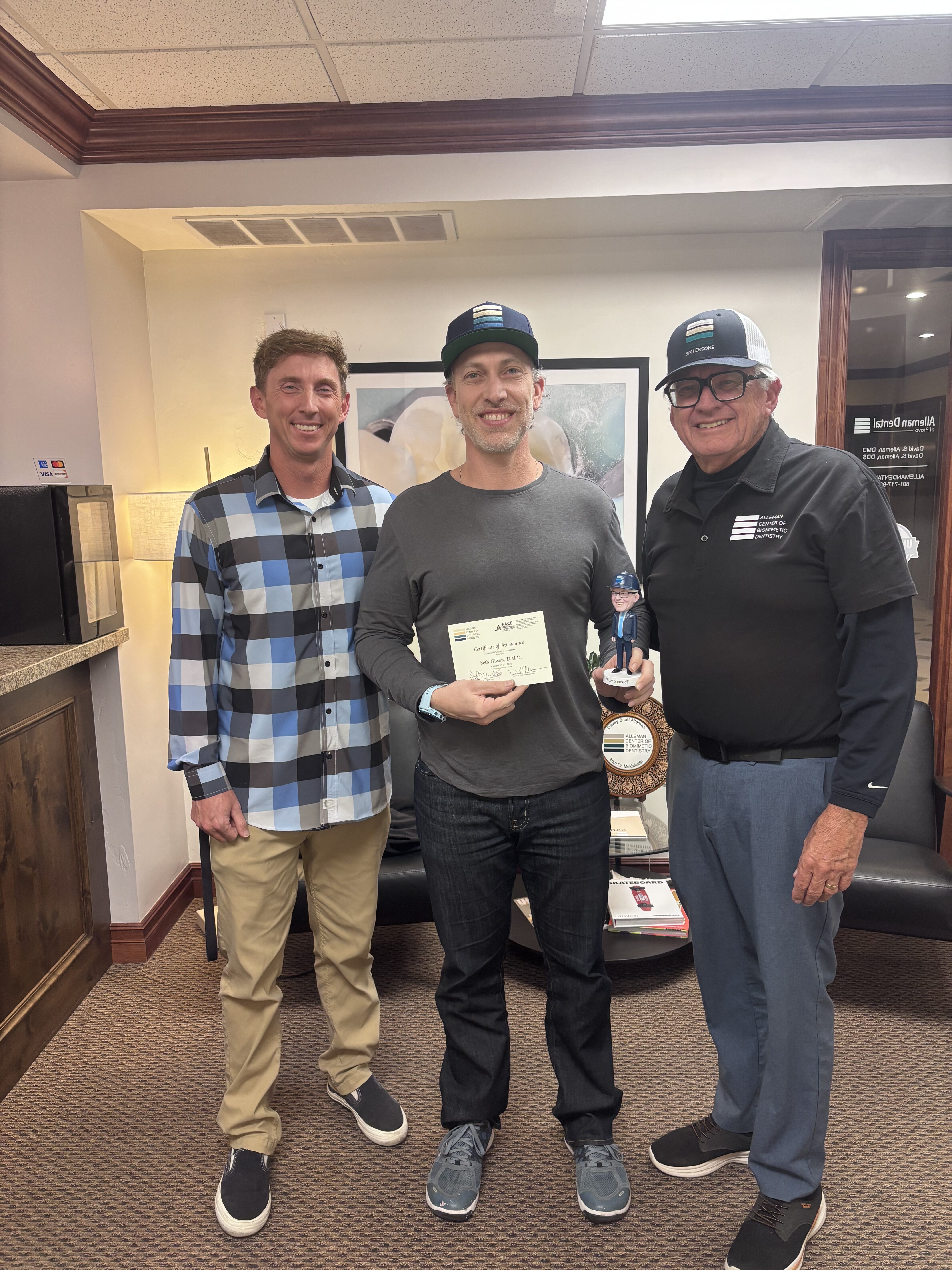
When I began my Mastership training, I immersed myself in the scientific literature. For me, it was not enough to know how to perform a procedure. I wanted to understand the reasoning behind it.
That process continues to influence my work and my commitment to preserving natural teeth.
Looking beyond the price of a filling
Another important part of our conversation is the difference between the initial price of dental treatment and its long-term value.
David discusses how repeated restorative procedures can gradually compromise natural tooth structure. We explore why the longevity of a restoration and the health of the remaining tooth deserve consideration alongside the immediate cost.
For me, dental longevity is not simply about how long a filling or crown lasts. It is about preserving the health, vitality, and function of the tooth over time.
No restorative treatment can guarantee a particular lifespan. Individual risk factors, the condition of the tooth, clinical technique, daily habits, and ongoing care all matter.
What failure can teach us
Towards the end of our conversation, I ask David what role failure has played in his innovation.
His experiences with unsuccessful restorations were not something he wanted to forget. They became a reason to investigate more deeply, to study the literature, and to ask better questions.
When I ask him what one lesson people should take from his life’s work, not just about dentistry but about life, his answer is simple.
“Keep reading.”
A thought to take with you
Progress begins with curiosity.
My invitation at the end of this episode is not necessarily to become an expert in dentistry. It is to notice where in your own life you may have accepted something simply because it is familiar.
Innovation often begins with discomfort. Ask questions, seek understanding, and remain open to what you might discover.
Healing isn’t about doing more. It’s about seeing more clearly.
Find your place
Inside the episode
Choose a chapter to open that moment on YouTube.
- 00:00 Welcome and introduction
- 02:14 Why David reconsidered dentistry
- 11:13 The patients who changed his perspective
- 16:00 Price versus value in dental treatment
- 16:59 Understanding tooth sensitivity
- 23:23 Rethinking what dentistry considers normal
- 31:32 The risks of challenging convention
- 40:32 The origins of biomimetic dentistry
- 48:02 The Six Lessons Approach
- 54:07 Dentistry that respects nature
- 1:04:43 Why preserving natural tooth structure matters
- 1:23:41 How failure drives innovation
- 1:34:10 The future of biomimetic dentistry
- 1:38:56 Building a legacy through education
- 1:44:26 A lesson for dentistry and for life
Chapter times follow the interview transcript and may differ slightly from the final video edit.
Meet our guest
Dr. David Alleman
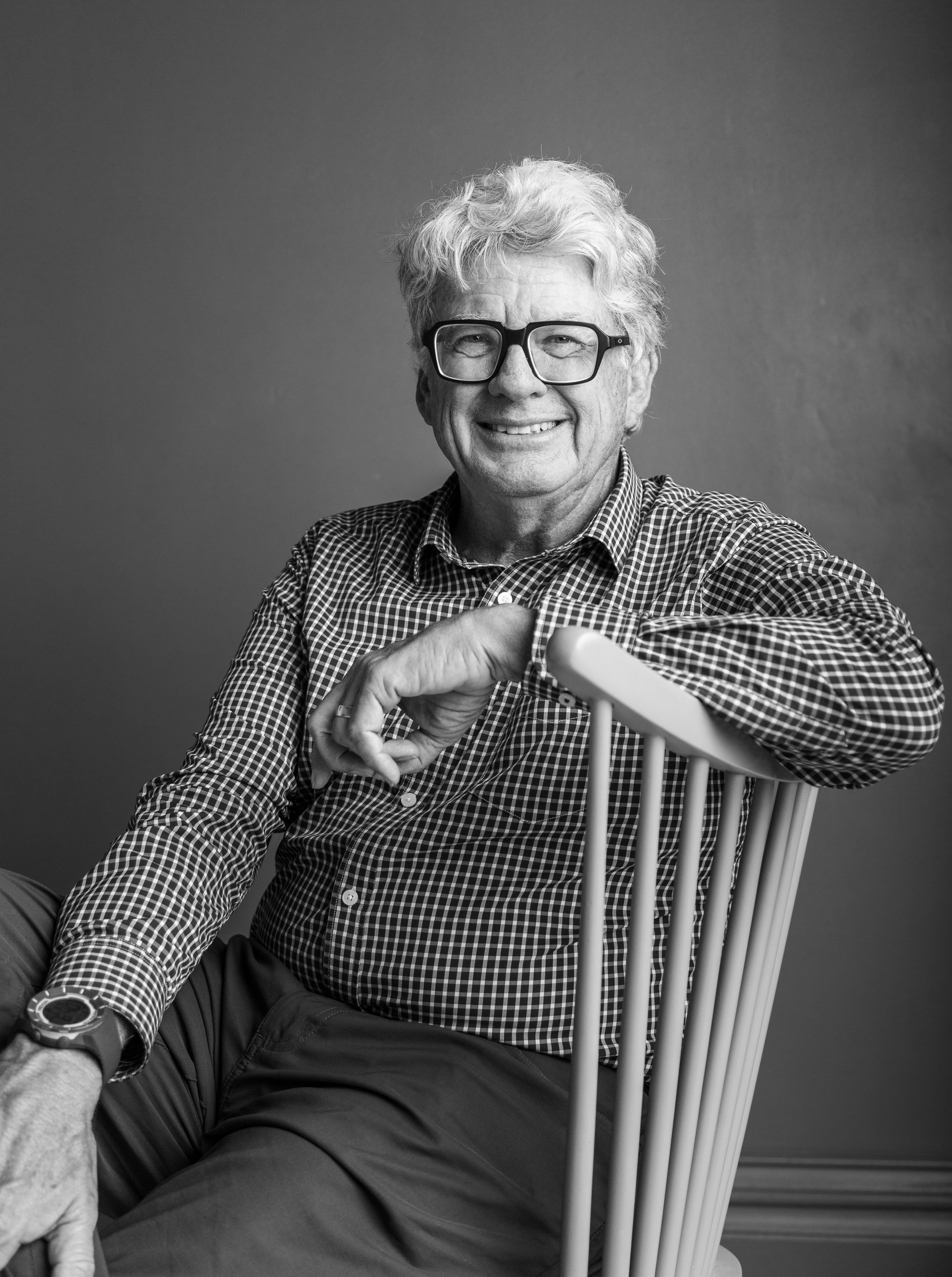
Dr. David Alleman, DDS, is a pioneer in biomimetic restorative dentistry, an international lecturer, and the founder and lead instructor at the Alleman Center of Biomimetic Dentistry.
With more than four decades of experience in dentistry, his work brings together scientific research in adhesion, tooth biomechanics, and restorative techniques.
Through his Six Lessons Approach and educational programs, he continues to share his philosophy of tooth preservation with dentists around the world.
Before you go
A few good questions
Is this episode for patients or dentists?
Both. David shares the experiences and scientific discoveries that changed his approach to restorative dentistry. Our conversation also explores why preserving natural teeth matters to people receiving dental care.
What is biomimetic restorative dentistry?
It is an approach to restoring teeth that aims to conserve healthy tooth structure, maintain pulp vitality when possible, and reproduce the natural function of a tooth through appropriate restorative techniques.
Can biomimetic dentistry help me avoid a crown?
In selected cases, adhesive partial-coverage restorations may offer an alternative to full-coverage crowns. The appropriate treatment depends on the condition of the tooth, the remaining tooth structure, and a thorough clinical evaluation.
Can biomimetic dentistry prevent root canals?
Maintaining pulp vitality whenever reasonably possible is a central goal of conservative restorative dentistry. Appropriate diagnosis, prevention, and restorative techniques may help reduce the need for root canal treatment in selected cases.
However, not every tooth can remain vital. Treatment decisions depend on the clinical condition of the tooth and the individual’s circumstances.
What does dental longevity mean?
Dental longevity is about preserving the health, vitality, structure, and function of our natural teeth over time. It involves prevention, daily habits, thoughtful clinical decisions, and appropriate restorative care when needed.
Is this page a complete transcript?
No. These are edited episode notes and selected reflections. Watch or listen to the complete conversation using the players above, or use the chapter links to explore a specific topic.
The Mindful Doctor
Where Dentistry Meets Whole-Body Healing.
More conversations about oral health, whole-body wellness, and the people behind the work.